The 2025 Canadian Functional Fitness Season; Lessons learned, and a path forward from the President
Overview
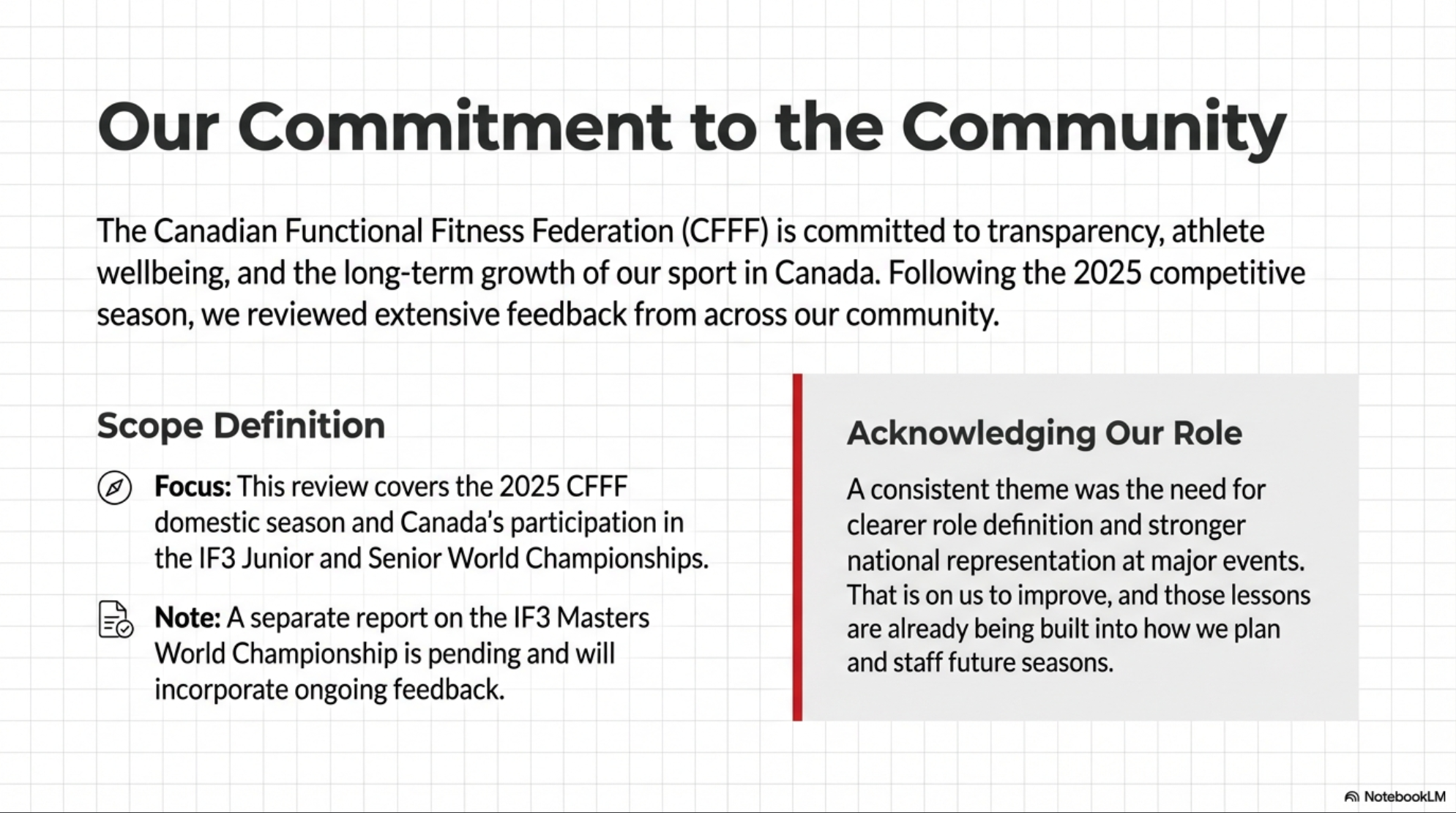
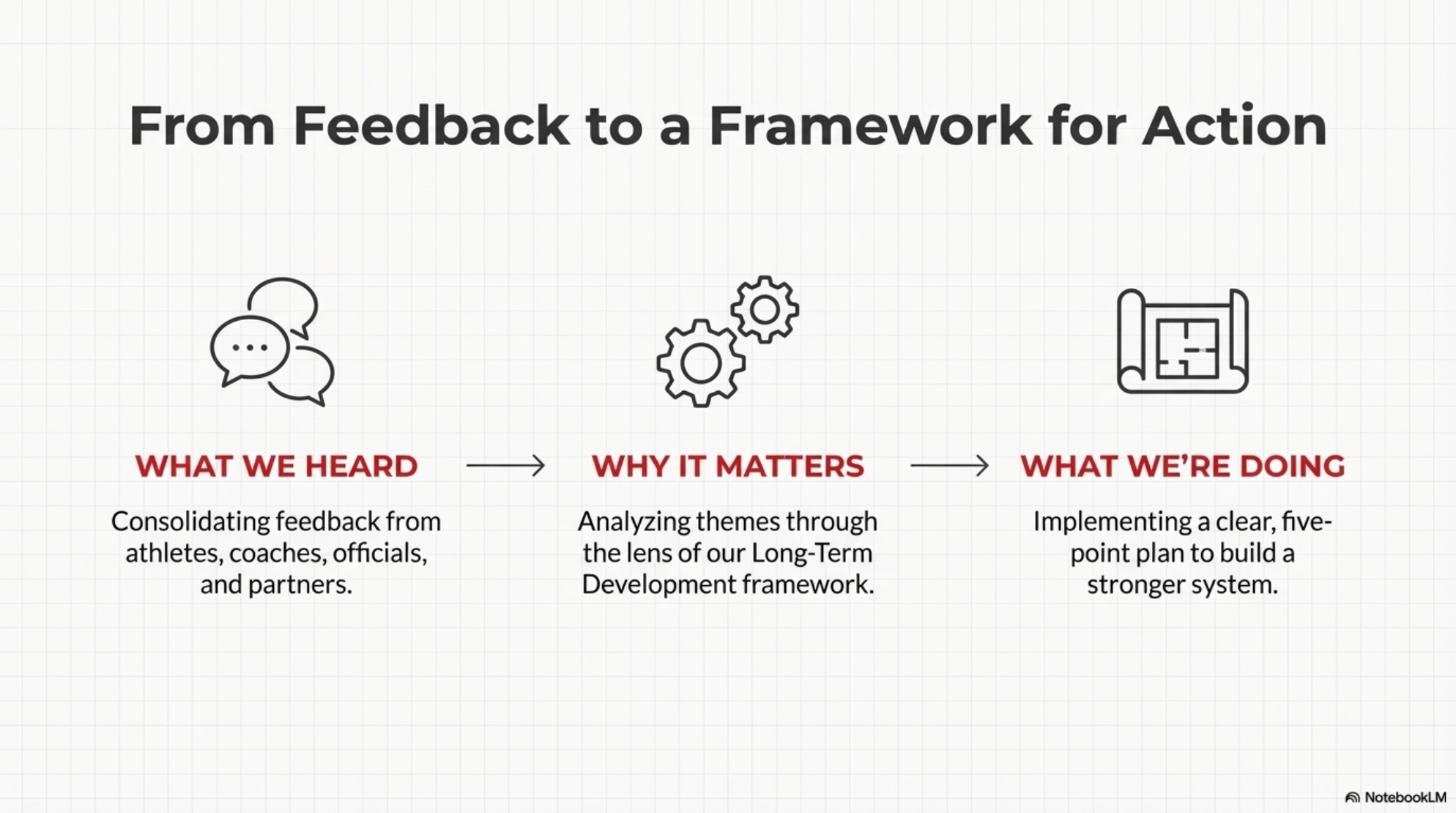
The Canadian Functional Fitness Federation (CFFF) is committed to transparency, athlete wellbeing, and the long-term growth of our sport in Canada. Following the 2025 competitive season, and Canada’s participation in the IF3 Junior and Senior World Championships, we reviewed feedback from athletes, coaches, officials, volunteers, and provincial partners through direct communication and formal event feedback surveys.
This summary focuses specifically on the 2025 CFFF domestic season and Canada’s participation in the IF3 Junior and Senior World Championships. A separate report addressing the IF3 Masters World Championship will be prepared once IF3’s findings from that event are formally released. Feedback related to the Masters event continues to be collected and will be incorporated into that subsequent report.
This review also includes reflection on national leadership responsibilities. A consistent theme in the feedback was that we need clearer role definition, stronger delegation, and expanded on-site national representation at major events so athletes, coaches, and families feel supported and connected to CFFF leadership. That is on us to improve, and those lessons are already being built into how we plan and staff future seasons.
What follows outlines what we heard, what we learned, and what we are doing next to strengthen athlete experience, improve alignment across the sport system, and ensure Canada continues to meet international and Sport Canada expectations.
Key Themes Identified
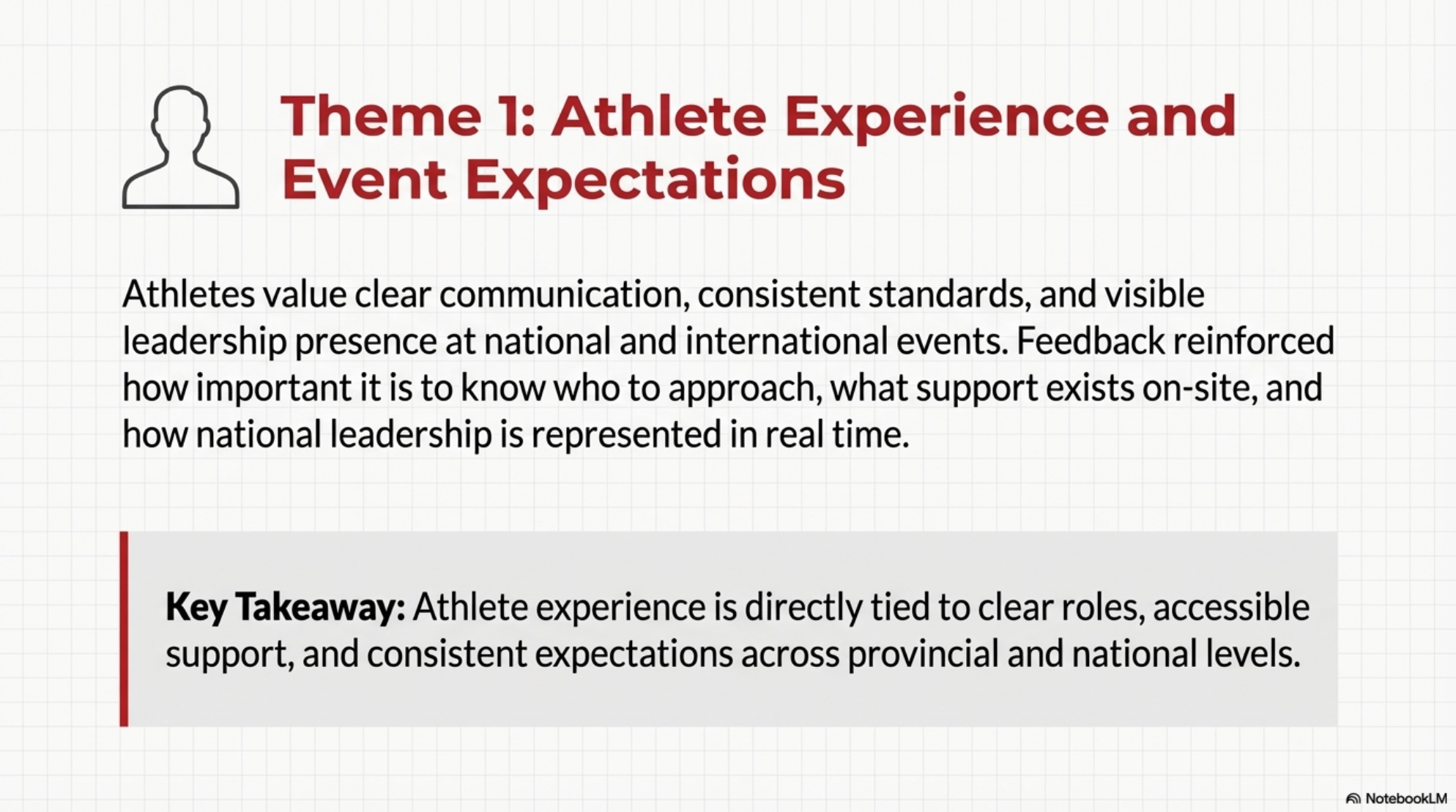
1. Athlete Experience and Event Expectations
Athletes value clear communication, consistent standards, and visible leadership presence at national and international events. Feedback reinforced how important it is to know who to approach, what support exists on-site, and how national leadership is represented in real time.
Key takeaway: Athlete experience is directly tied to clear roles, accessible support, and consistent expectations across provincial and national levels.
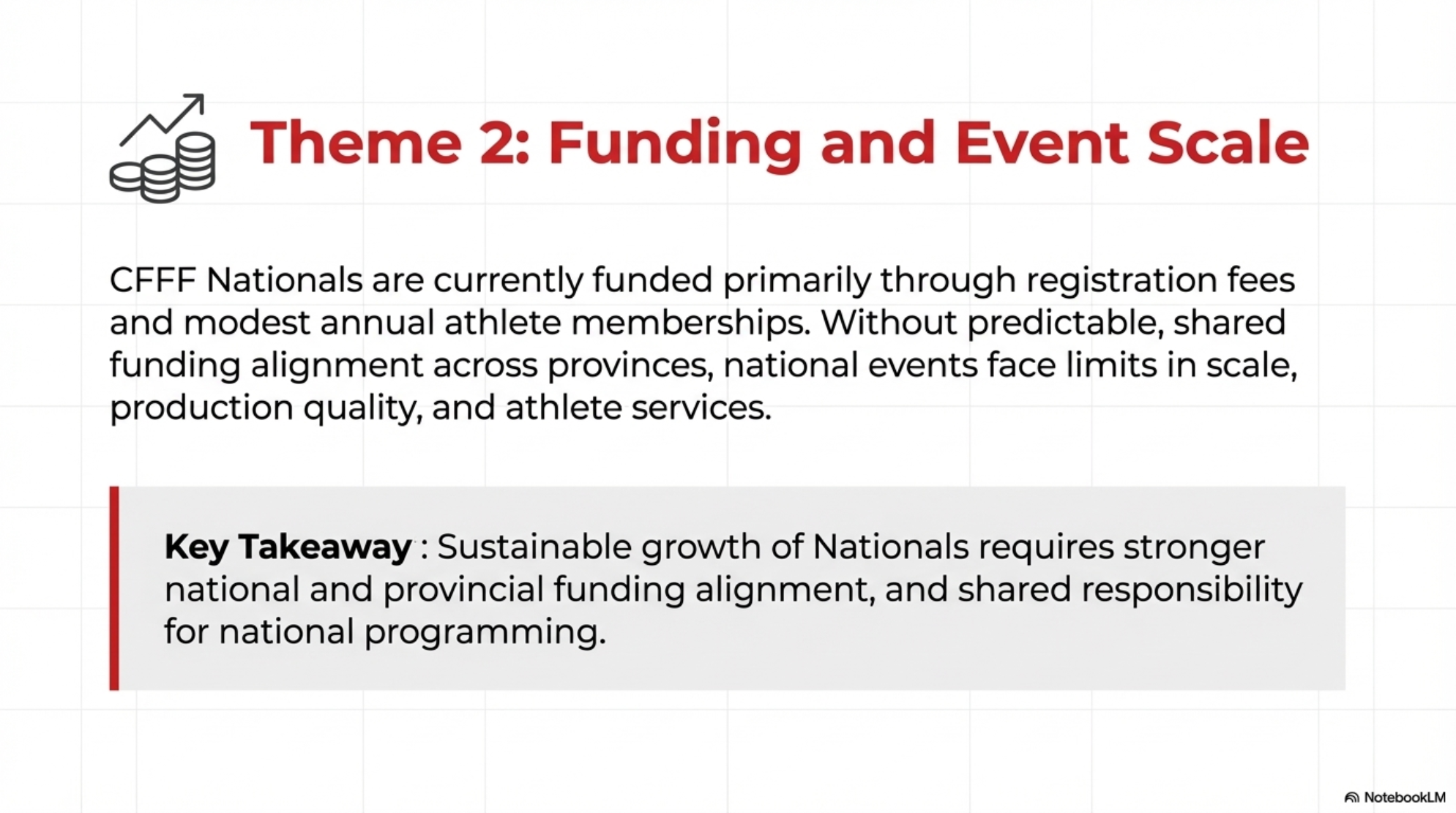
2. Funding and Event Scale
CFFF Nationals are currently funded primarily through registration fees and modest annual athlete memberships. Without predictable, shared funding alignment across provinces, national events face limits in scale, production quality, and athlete services.
Key takeaway: Sustainable growth of Nationals requires stronger national and provincial funding alignment, and shared responsibility for national programming.
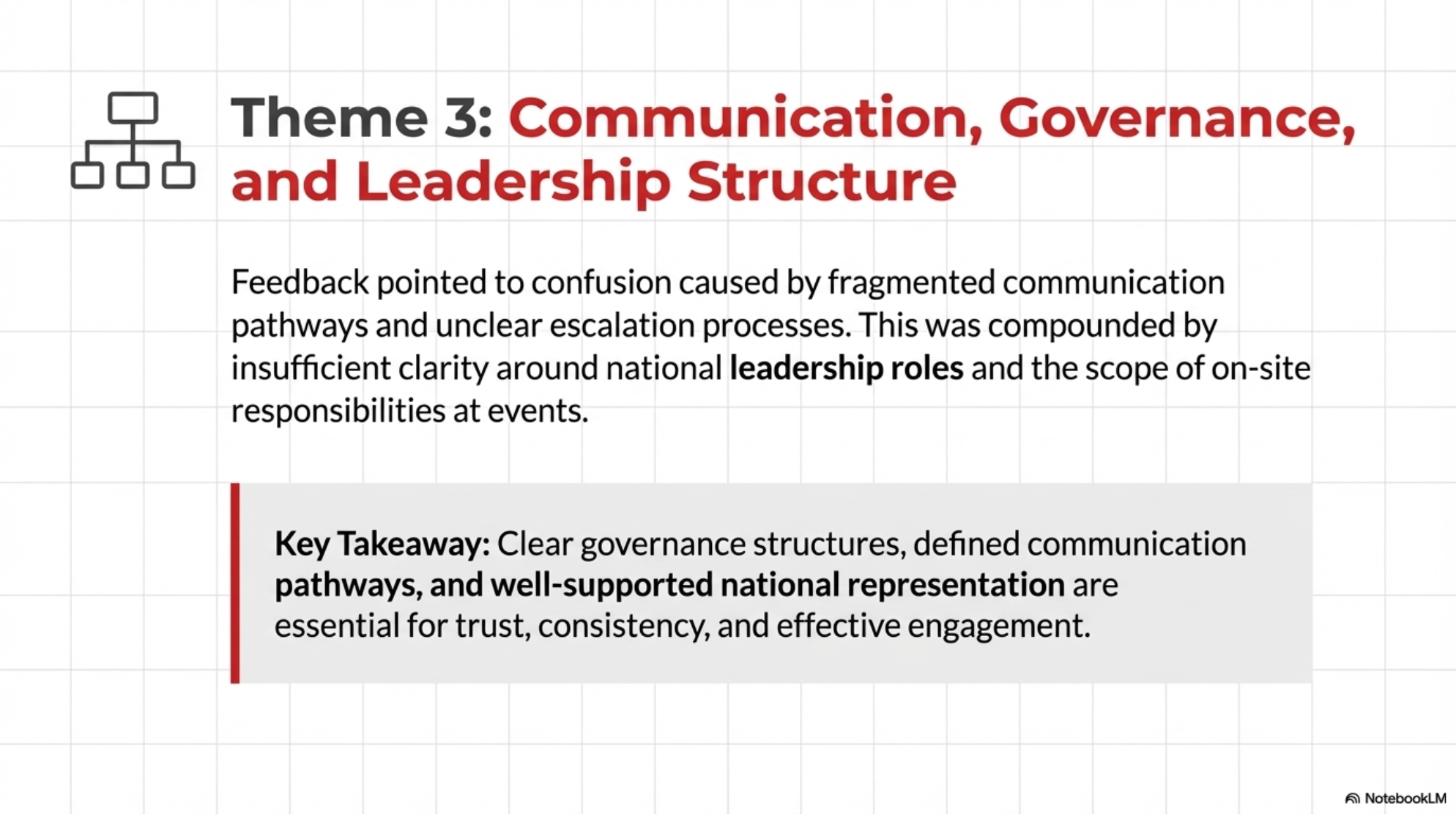
3. Communication, Governance, and Leadership Structure
Feedback pointed to confusion caused by fragmented communication pathways and unclear escalation processes. In some cases, this was compounded by insufficient clarity around national leadership roles and the scope of on-site responsibilities at events.
Key takeaway: Clear governance structures, defined communication pathways, and well-supported national representation are essential for trust, consistency, and effective engagement.
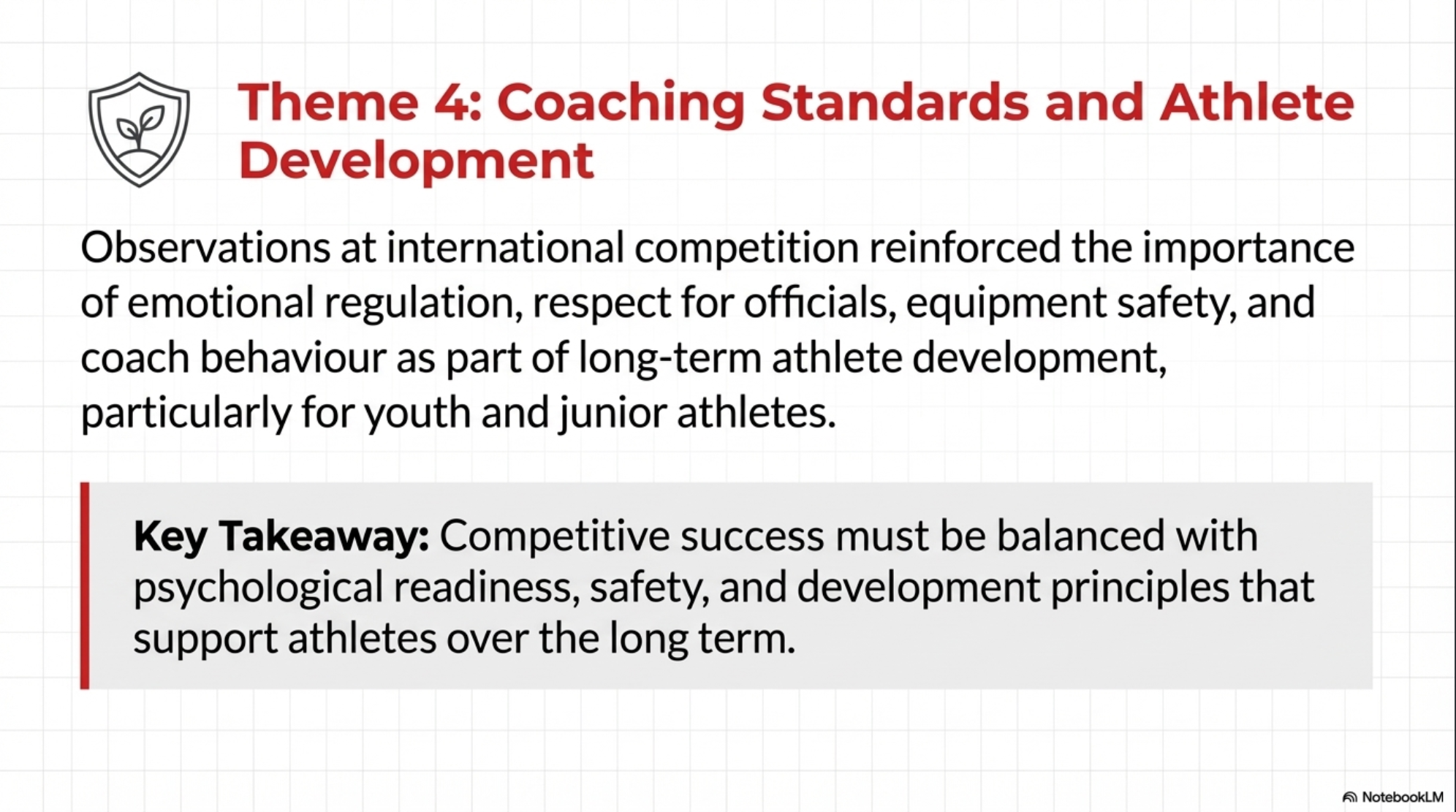
4. Coaching Standards and Athlete Development
Observations at international competition reinforced the importance of emotional regulation, respect for officials, equipment safety, and coach behaviour as part of long-term athlete development, particularly for youth and junior athletes.
Key takeaway: Competitive success must be balanced with psychological readiness, safety, and development principles that support athletes over the long term.
Alignment With Long-Term Athlete Development
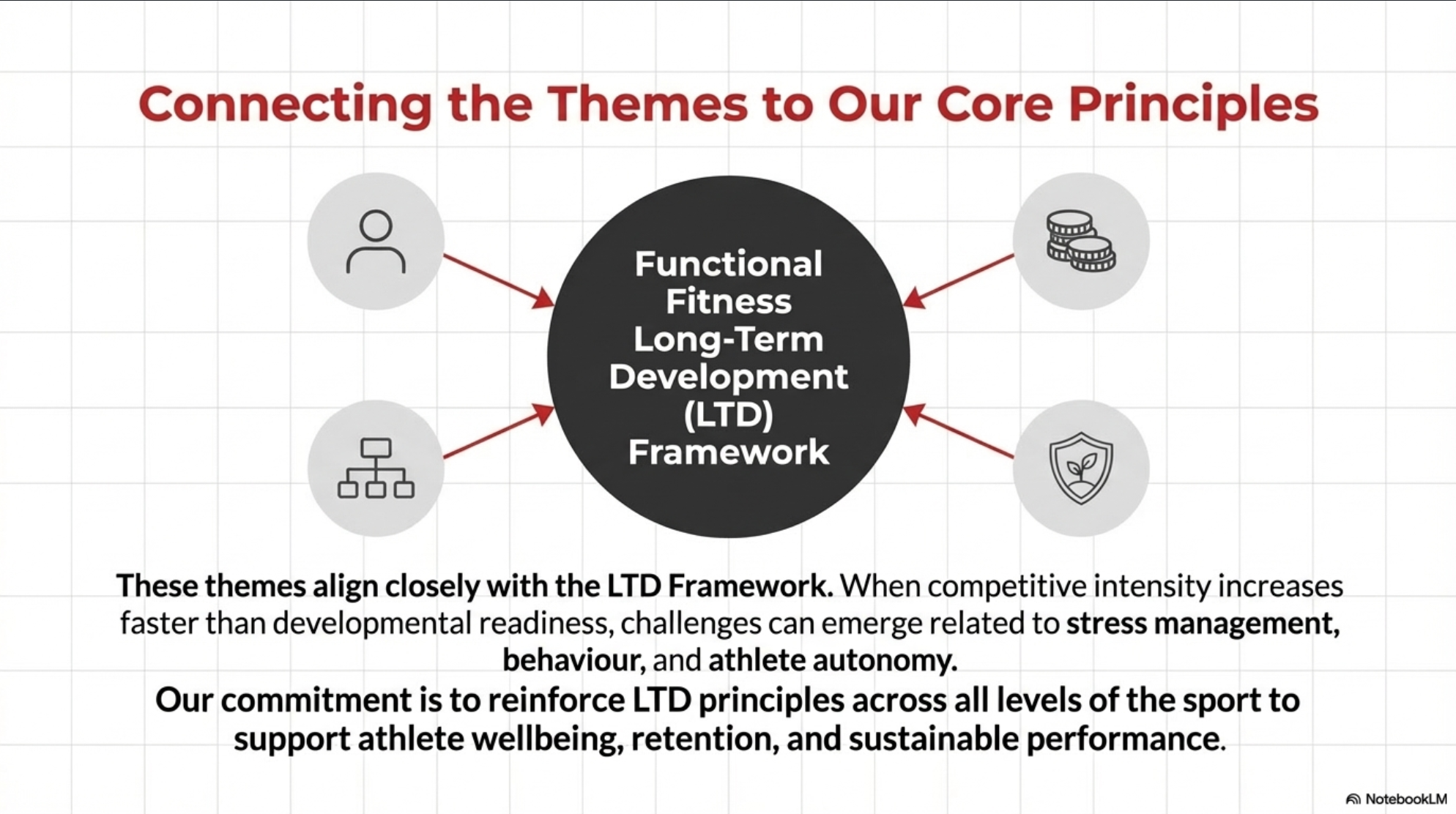
These themes align closely with the Functional Fitness Long-Term Development (LTD) Framework. When competitive intensity increases faster than developmental readiness, challenges can emerge related to stress management, behaviour, and athlete autonomy.
CFFF remains committed to reinforcing LTD principles across all levels of the sport to support athlete wellbeing, retention, and sustainable performance.
What Happens Next
This is where we move from “themes” to “implementation.”
The actions below are designed to be practical, non-punitive, and focused on clarity, consistency, and sustainability. They are not about calling out individuals. They are about building a stronger system that supports athletes, protects officials and volunteers, and improves the experience for everyone involved.
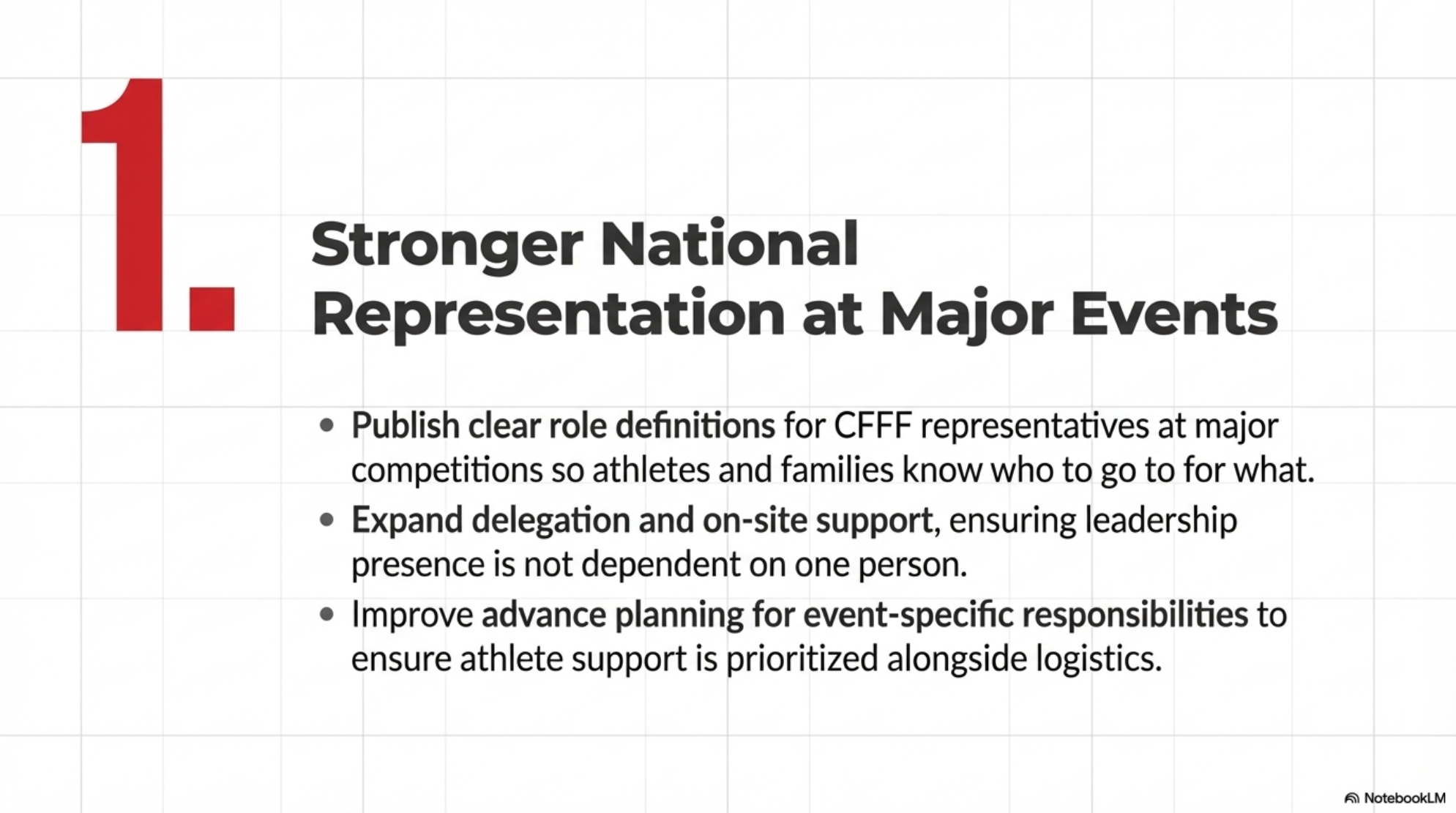
1) Stronger National Representation at Major Events
Clearer, published role definitions for CFFF representatives at major competitions (so athletes and families know who does what, and where to go for what).
Expanded delegation and on-site support, so national leadership presence is not dependent on one person trying to do everything.
Better advance planning for event-specific responsibilities (including presence management), so athlete support does not get lost inside logistics.
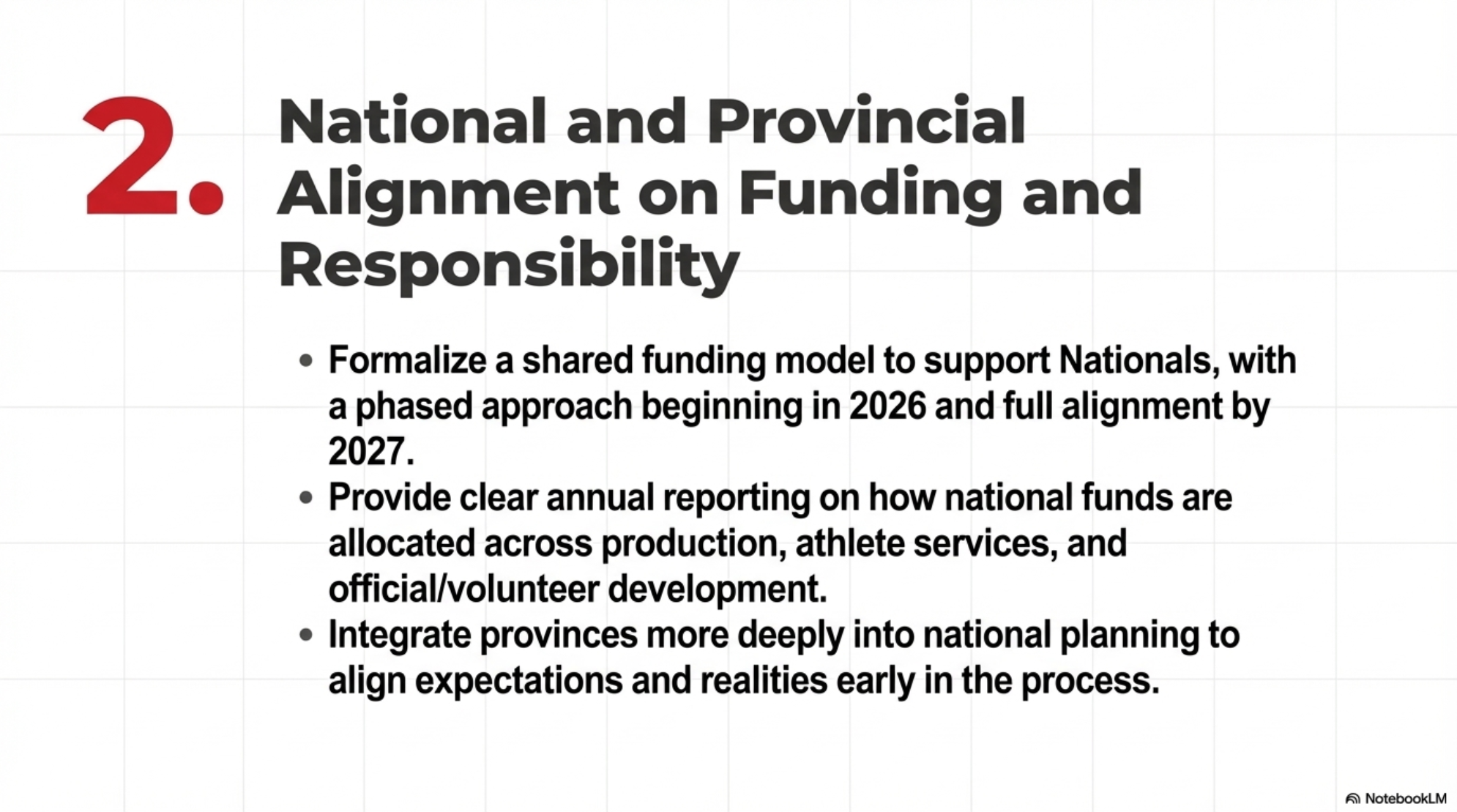
2) National and Provincial Alignment on Funding and Responsibility
Formalizing a shared funding model that supports Nationals and national programming. This includes a phased approach for implementation beginning in 2026, with the goal of full alignment by 2027.
Clear annual reporting on how national funds are allocated, including Nationals production quality, athlete services, judge and volunteer development, and standards enforcement.
Stronger integration of provinces into national planning so expectations and realities are aligned early, not debated under pressure later.
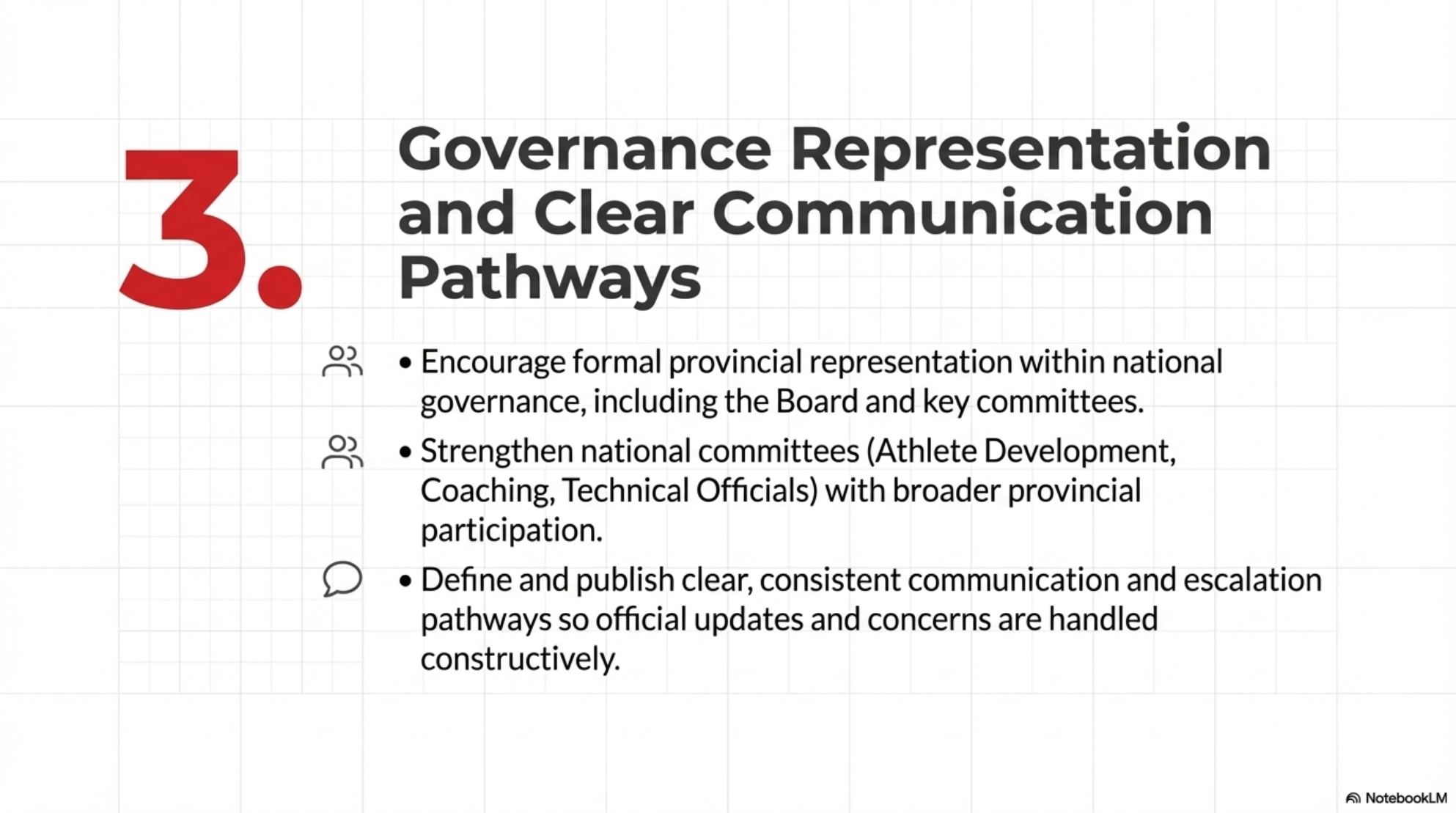
3) Governance Representation and Clear Communication Pathways
Encouraging each province to have formal representation within national governance and operations, including Board and committee involvement.
Strengthening national committees (Athlete Development, Coaching and Education, Technical Officials and Standards) with broader provincial participation so decisions reflect real on-the-ground context.
Defining clear, consistent communication and escalation pathways so athletes, clubs, and provinces know where “official updates” live, and how concerns are raised and addressed constructively.
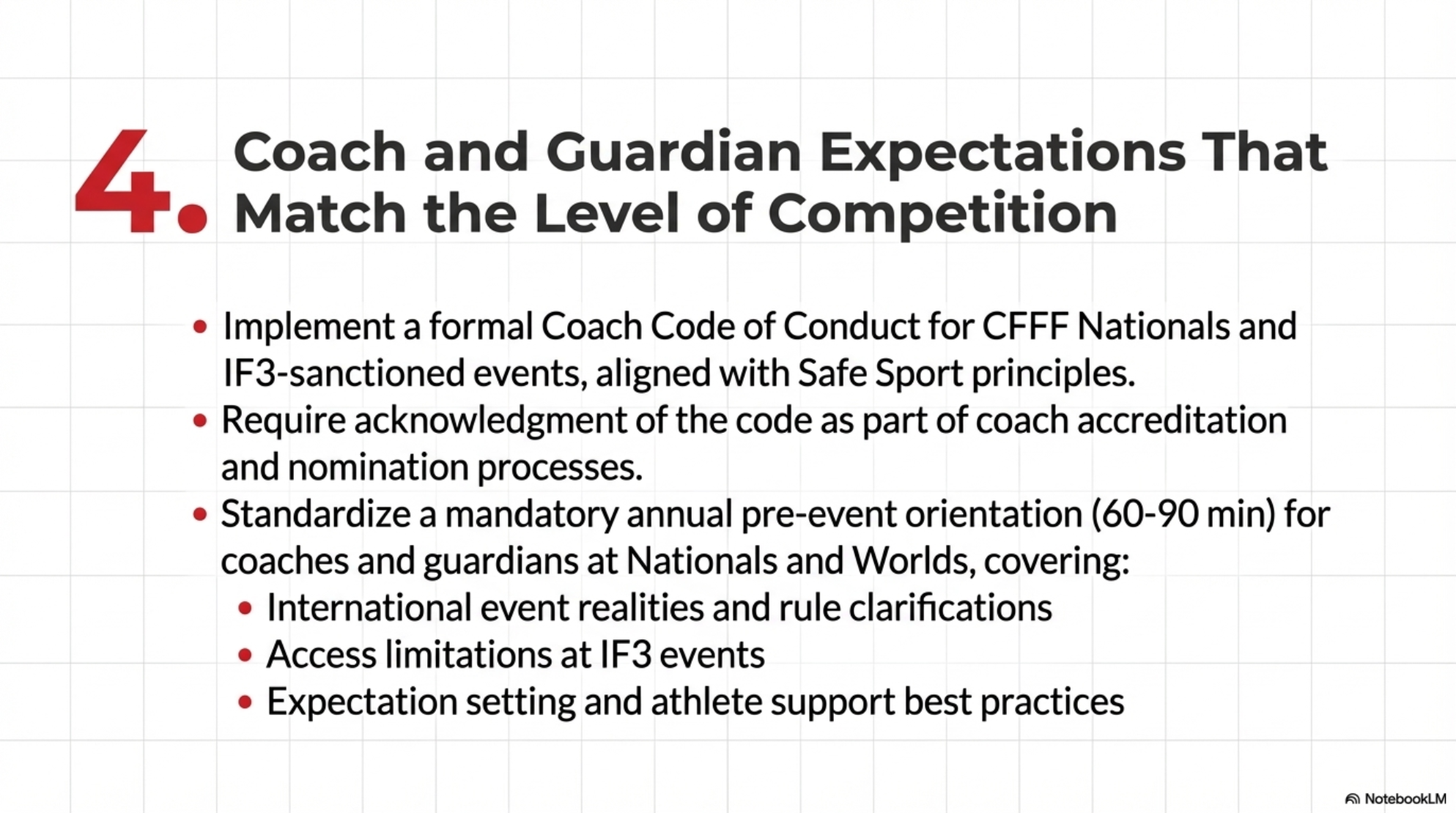
4) Coach and Guardian Expectations That Match the Level of Competition
Implementing a formal Coach Code of Conduct for CFFF Nationals and IF3-sanctioned events, aligned with Safe Sport and long-term development principles.
Requiring acknowledgment of that code as part of coach accreditation or nomination processes (without creating new, parallel disciplinary systems).
Standardizing a mandatory pre-event orientation for coaches and guardians attending Nationals and Worlds, delivered annually (roughly 60 to 90 minutes), covering:
international event realities and rule clarification processes
access limitations at IF3 events
expectation setting, escalation pathways, and athlete support best practices
This is a simple step that prevents a lot of avoidable conflict.
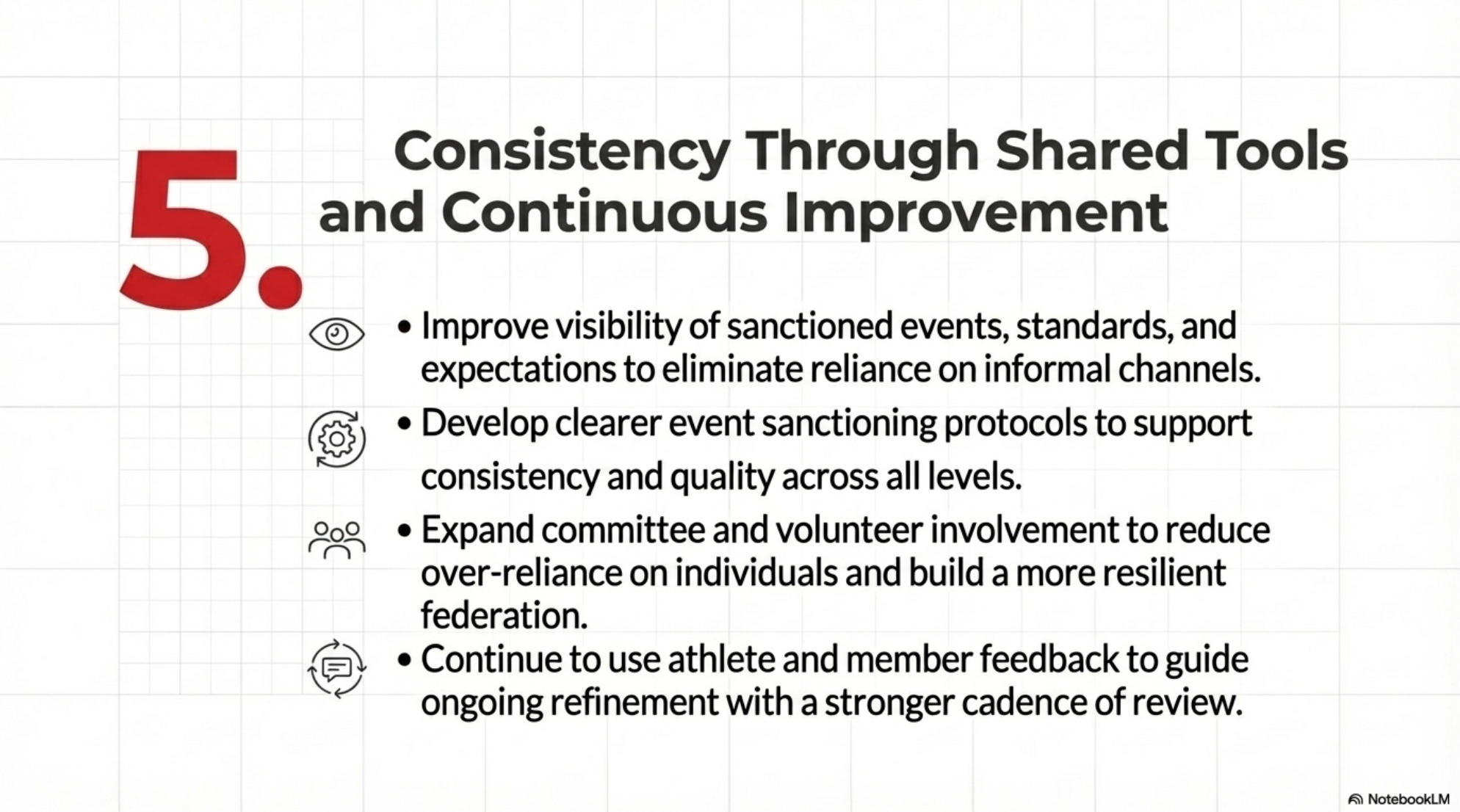
5) Consistency Through Shared Tools, Event Sanctioning, and Continuous Improvement
Improving visibility of sanctioned events, standards, and expectations so athletes are not relying on informal channels to stay informed.
Developing clearer event sanctioning protocols across levels to support consistency and quality.
Expanding committee and volunteer involvement to reduce over-reliance on individual roles and build a more resilient federation structure.
Continuing to use athlete and member feedback to guide ongoing refinement, with a stronger cadence of review and follow-up.
A Shared Responsibility
The continued growth and credibility of Functional Fitness in Canada depends on collaboration between athletes, coaches, clubs, provincial federations, and national leadership. Strong provinces help shape national standards. National alignment ensures consistency, fairness, and international credibility.
Our objective is simple: build a system where athletes feel supported, informed, and proud to represent Canada, with leadership structures that are clear, accessible, and resilient.
Thank You
Thank you to everyone who contributed feedback and engaged constructively throughout the 2025 season. Your input directly shapes how CFFF evolves and improves.
Ongoing feedback is always welcome at: www.cfff.fit/feedback